Industry-Integrated Lecture on GC-MS
Activity TypeGuest Lecture / Expert Talk
DepartmentPharmacy (Saraswati College of Pharmacy, Saraswati Institute of Pharmaceutica Education and Research
NAAC CategoryCriterion 3
SDGSDG 4, SDG 9
Accreditation ActivityIndustry Academia Interaction
VenueSaraswati College of Pharmacy LH101
CoordinatorMr. Saurav Anand & Ms. Gursimran Kaur
Participants69
Description
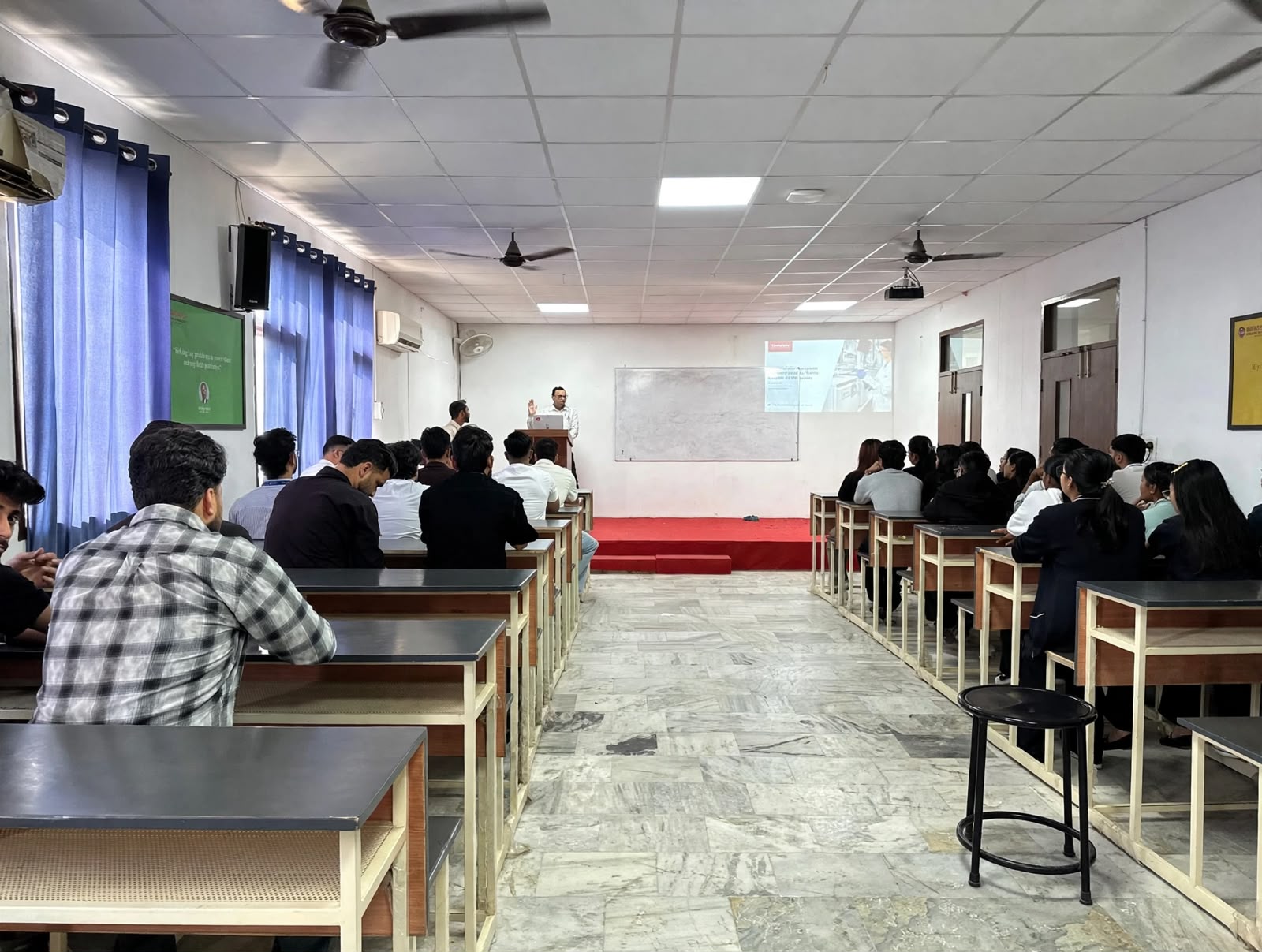
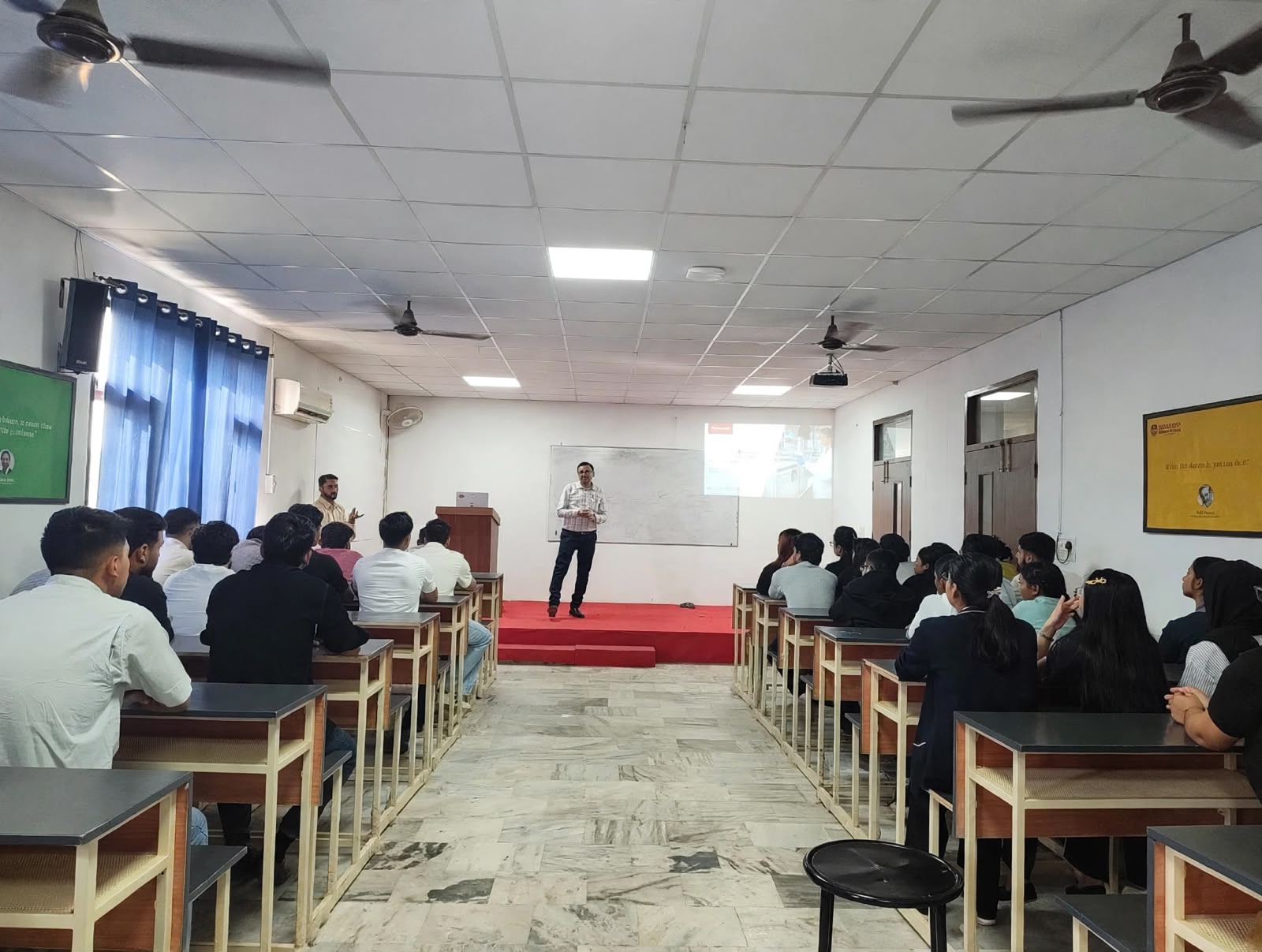
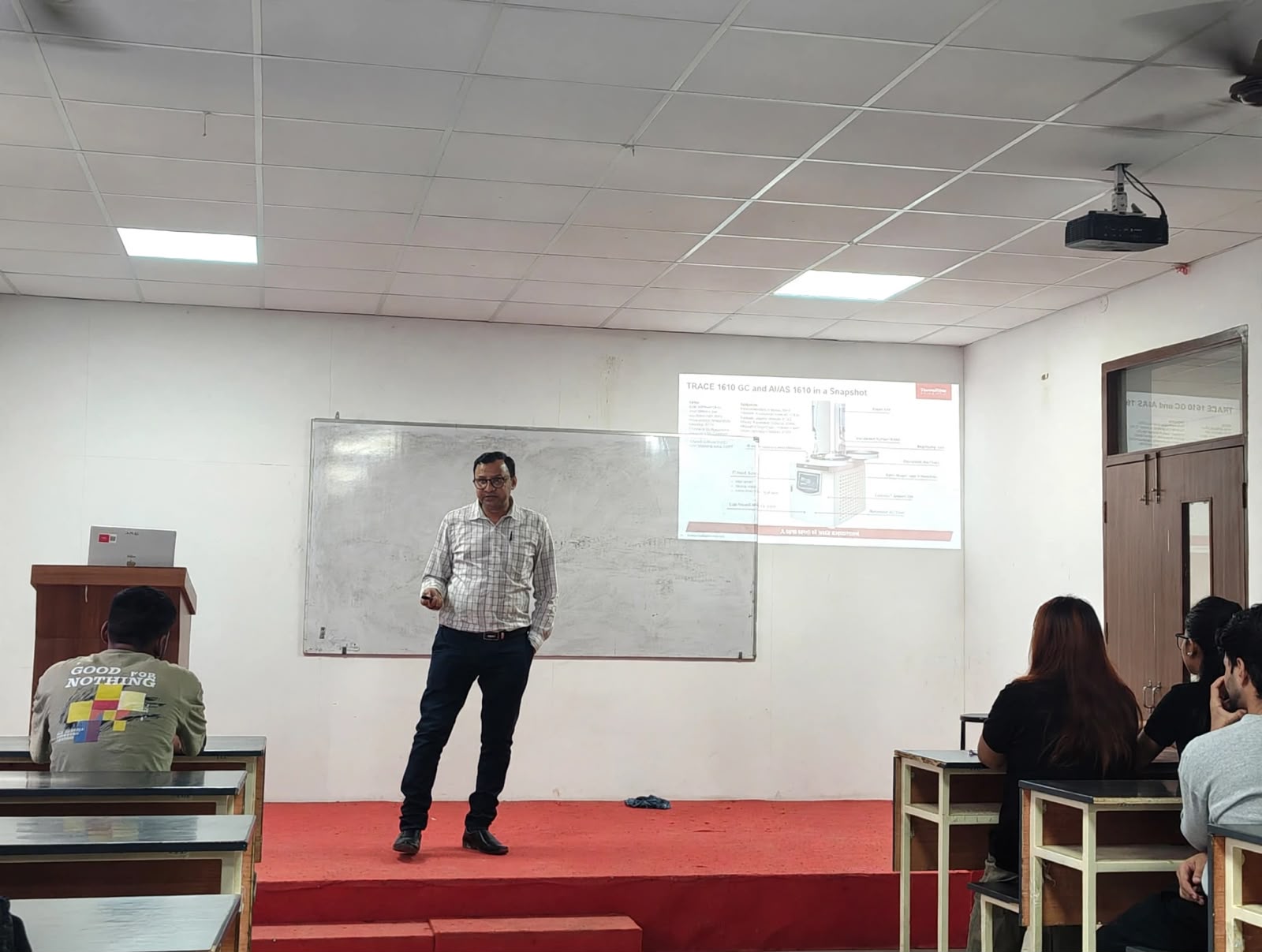
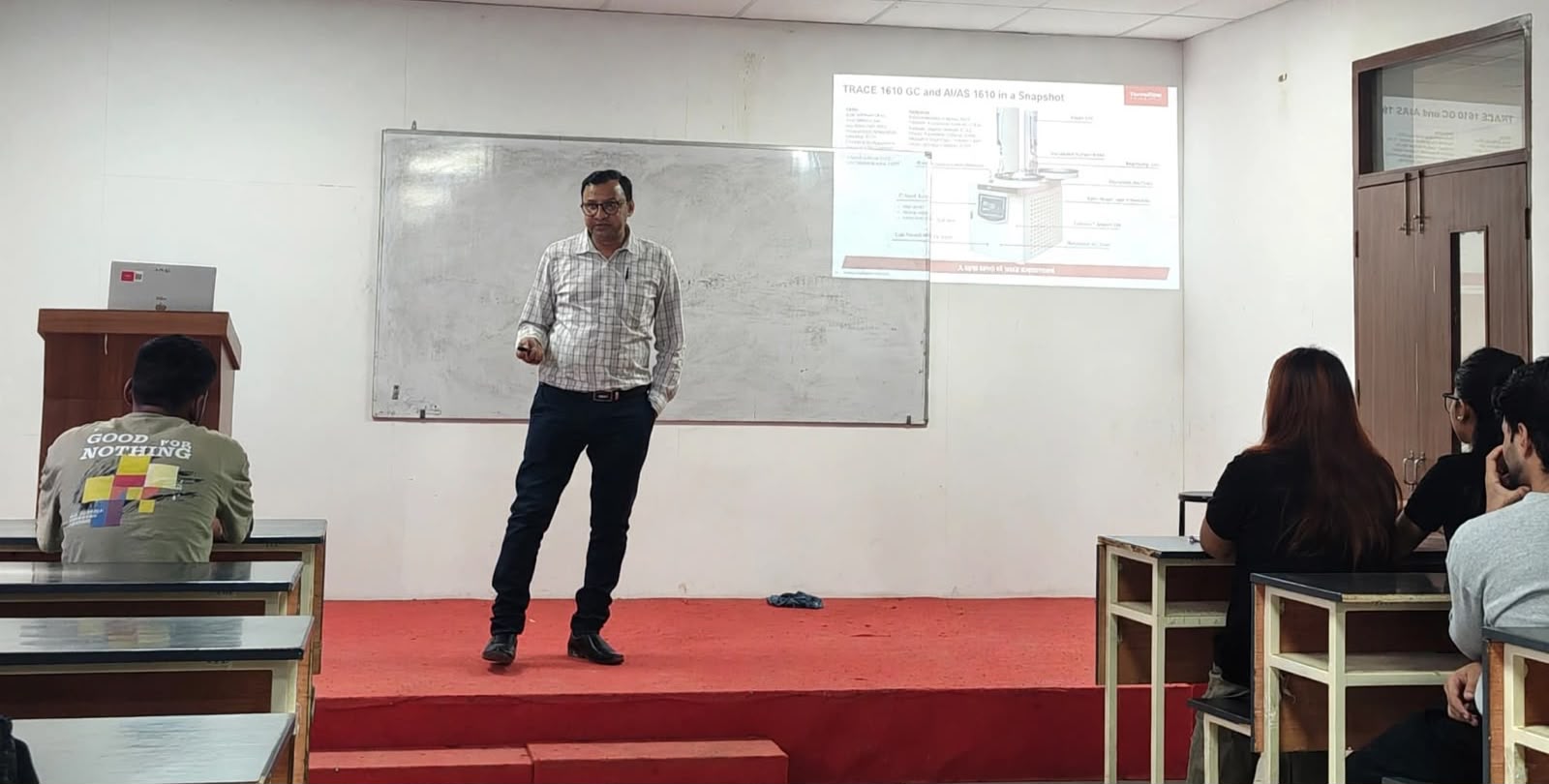
Saraswati College of Pharmacy and Saraswati Institute of Pharmaceutical Education & Research organized an Industry-Integrated Lecture on “Gas Chromatography–Mass Spectrometry (GC-MS)” for B. Pharm 7th Sem students on 4 November 2026 (Wednesday), from 10:00 AM to 12:30 PM.
The lecture was organized to provide students with practical exposure and industry-oriented knowledge about GC-MS, an advanced analytical technique widely used in pharmaceutical analysis.
During the session, detailed discussions were conducted on the principles, instrumentation, working mechanism, and applications of GC-MS. Various components of gas chromatography, including the carrier gas, sample injection system, chromatographic column, and detector, were explained. The working of the mass spectrometer, including ionization, mass analysis, and detection of ions, was also discussed. Furthermore, its applications in drug identification, impurity profiling, qualitative and quantitative analysis, and pharmaceutical quality control were highlighted.
The industry-integrated approach helped students understand how GC-MS is utilized in actual pharmaceutical laboratories and quality control departments. Interactive discussions and practical examples made the session informative and engaging, allowing students to relate their theoretical knowledge to industrial applications.
The lecture provided valuable insights into advanced analytical techniques and contributed to strengthening the technical knowledge, analytical understanding, and industry awareness of the students.
Objectives
• To provide students with industry-oriented knowledge about Gas Chromatography–Mass Spectrometry (GC-MS) and its applications in pharmaceutical analysis.
• To explain the fundamental principles and working mechanisms of gas chromatography and mass spectrometry.
• To familiarize students with the instrumentation, components, and analytical techniques involved in GC-MS.
• To highlight the applications of GC-MS in drug identification, impurity profiling, and quality control.
Outcomes
1. Students gained a better understanding of the principles and working mechanism of GC-MS.
2. Students became familiar with the instrumentation, operation, and analytical applications of GC-MS.
3. The lecture enhanced students' knowledge of drug identification, separation, and analysis using GC-MS.
4. Students developed awareness of the importance of GC-MS in pharmaceutical research, quality control, and impurity detection.
5. The session helped students connect classroom learning with real-world industrial practices and analytical applications.
Gallery